
The New Architecture of Gulf Power in a Multipolar World
As Washington recalibrates its regional posture and Beijing deepens its economic footprint, the Gulf states are no longer choosing sides — they are writing the rules of a new game entirely.
For decades, the foreign policy calculus of the Gulf Cooperation Council states operated within a binary framework: align with Washington for security guarantees, tolerate Riyadh's regional primacy, and keep a wary eye on Tehran. The framework was imperfect, often uncomfortable, but broadly stable.
That framework is now obsolete.
A New Geometry of Power
The evidence is structural, not anecdotal. Saudi Arabia and the UAE have deepened trade and investment ties with China while simultaneously hosting US military assets. Qatar maintains what can only be described as an entirely independent foreign policy — hosting both a major American air base and the political leadership of Hamas. Kuwait balances between Iran and the GCC. Oman mediates between adversaries who, in any prior era, would have refused to share a diplomatic back-channel.
This is not incoherence. It is strategy.
The Gulf states have collectively concluded that the era of choosing a patron is over. What has replaced it is something more interesting and considerably more complex: a posture of strategic promiscuity, in which relationships are maintained with all major powers simultaneously, leverage is accumulated rather than spent, and neutrality is weaponised as a form of influence.
The Leverage Accumulation Model
Consider what the Gulf states have quietly assembled over the past decade. Sovereign wealth funds with combined assets exceeding $4 trillion. Energy infrastructure that remains, despite the green transition, indispensable to the global economy through at least 2040 by any credible forecast. Geographic positioning astride the world's most critical shipping lanes. And increasingly, a set of institutions — financial, diplomatic, cultural — that project soft power far beyond what their populations would suggest.
This is not the profile of states that need to choose a side. It is the profile of states that have options.
Dr. Layla Al-Rashidi is Senior Fellow for Geopolitics and Regional Security at Imprint. She previously served as a policy advisor to the Arab League.
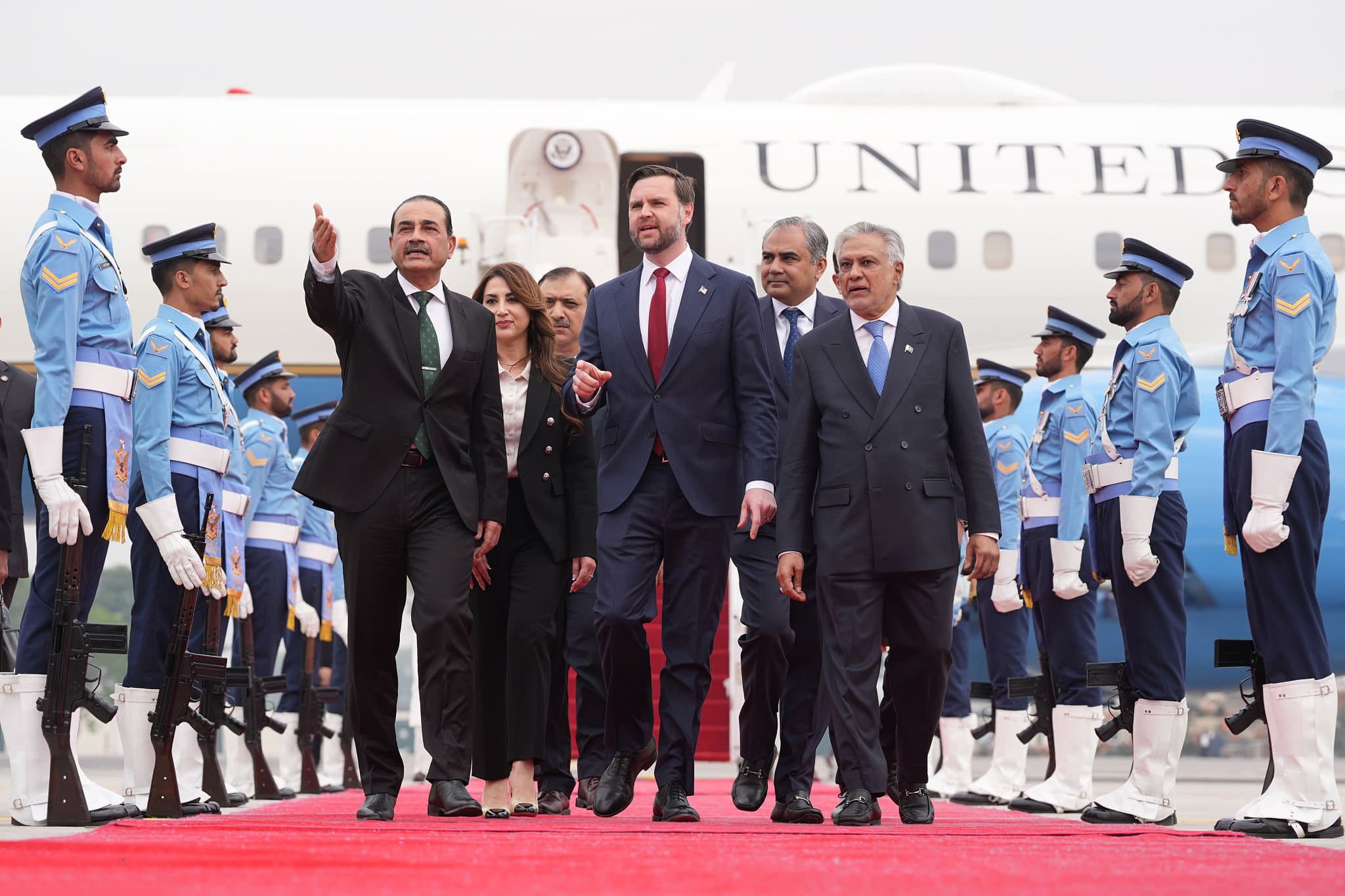
The Rawalpindi Gamble: Why Pakistan's Strategic Bets Could Backfire
Field Marshal Asim Munir has made Pakistan useful to Washington and Riyadh. But countries that build their foreign policy on personal patronage and concentrated dependence rarely emerge stronger - and Pakistan's 259 million citizens will bear the cost when the calculus shifts.

Democracy Is Not Failing. It Is Being Deliberately Dismantled.
The erosion of democratic norms is not a symptom of system failure — it is the output of a systematic project that has been running for twenty years.
Weekly intelligence for serious readers
Original analysis, featured essays, and the ideas shaping the region — delivered every Thursday.