
Reimagining Islamic Finance for the Digital Asset Age
Sharia-compliant frameworks are being stress-tested by decentralised finance — and the scholars are paying very close attention.
Islamic finance has always been a discipline in motion. From its formal codification in the 1970s through its rapid expansion across Southeast Asia and the Gulf, the field has shown a remarkable capacity to develop instruments that satisfy both the demands of modern capital markets and the constraints of Sharia law.
That capacity is now being tested by something genuinely new: the emergence of decentralised finance, digital assets, and programmable money.
The Core Tension
The tension is not simply technical. It goes to the heart of what Islamic finance is for. The prohibition on riba — broadly, on making money from money without productive economic activity — was designed to ensure that financial activity remained tethered to the real economy. It was a moral constraint as much as a legal one.
Decentralised finance, in many of its manifestations, appears to offer precisely the kind of return-without-risk that Islamic finance exists to prohibit. Yield farming, liquidity provision, automated market-making — these activities generate returns through mechanisms that have no obvious analogue in classical Islamic jurisprudence.
And yet. The scholars who have examined these instruments most carefully have reached more nuanced conclusions than the initial scepticism suggested.
Prof. Zainab Hassan is a Professor of Islamic Finance and a guest contributor to Imprint.

The Climate Debt the Gulf Owes — and How It Should Pay It
The region that supplied the world's hydrocarbons for a century has both the responsibility and the resources to lead the clean energy transition. The question is whether it has the will.

Education Reform in the Arab World Needs Radicals, Not Technocrats
Decades of curriculum reform, institutional restructuring, and international benchmarking have produced modest results. The problem is not the tools — it is the ambition.
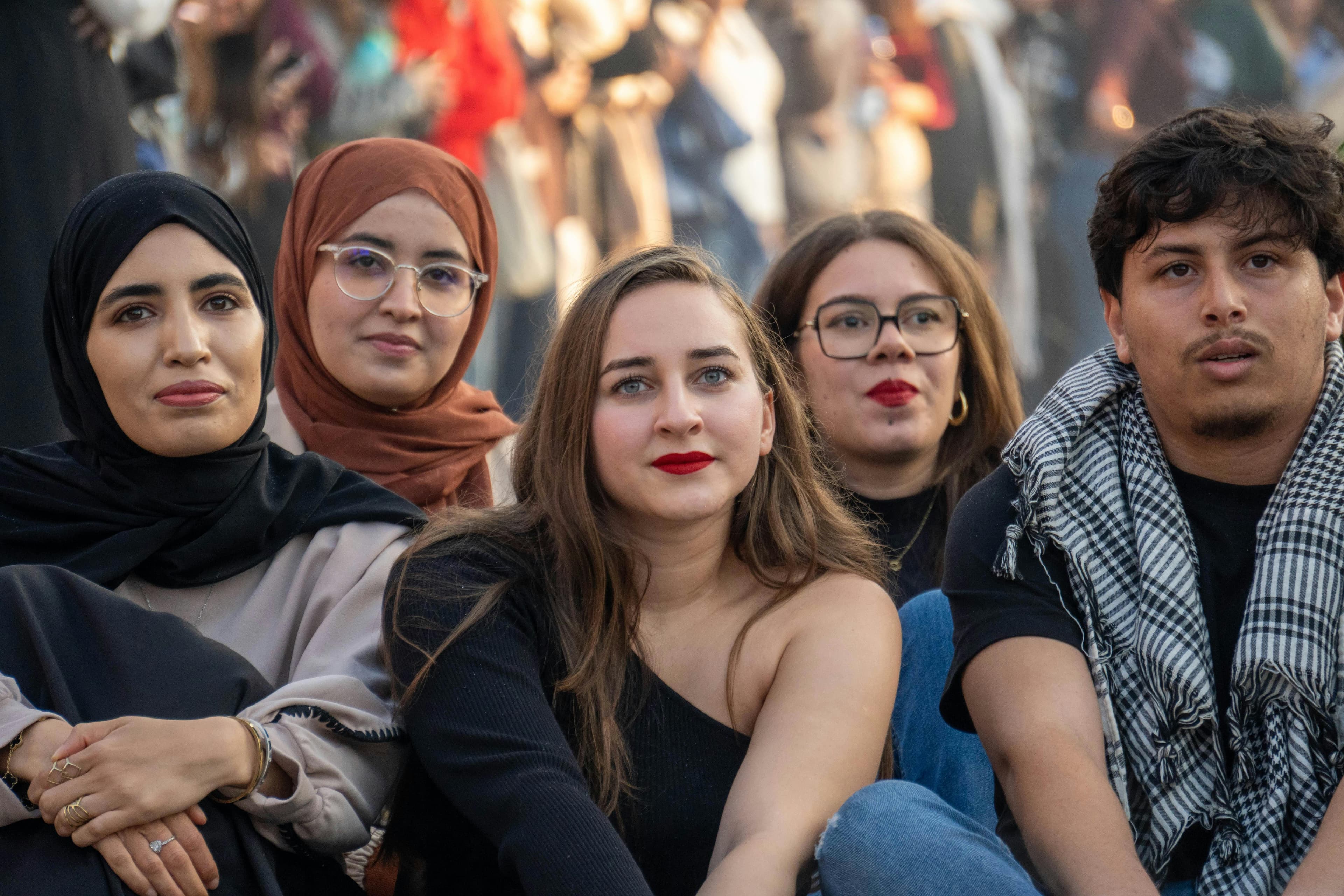
The Arab Youth Paradox: Globally Connected, Locally Frustrated
A generation raised on global media, educated abroad, and fluent in the language of opportunity finds itself navigating labour markets and social structures that were not designed for them.
Weekly intelligence for serious readers
Original analysis, featured essays, and the ideas shaping the region — delivered every Thursday.