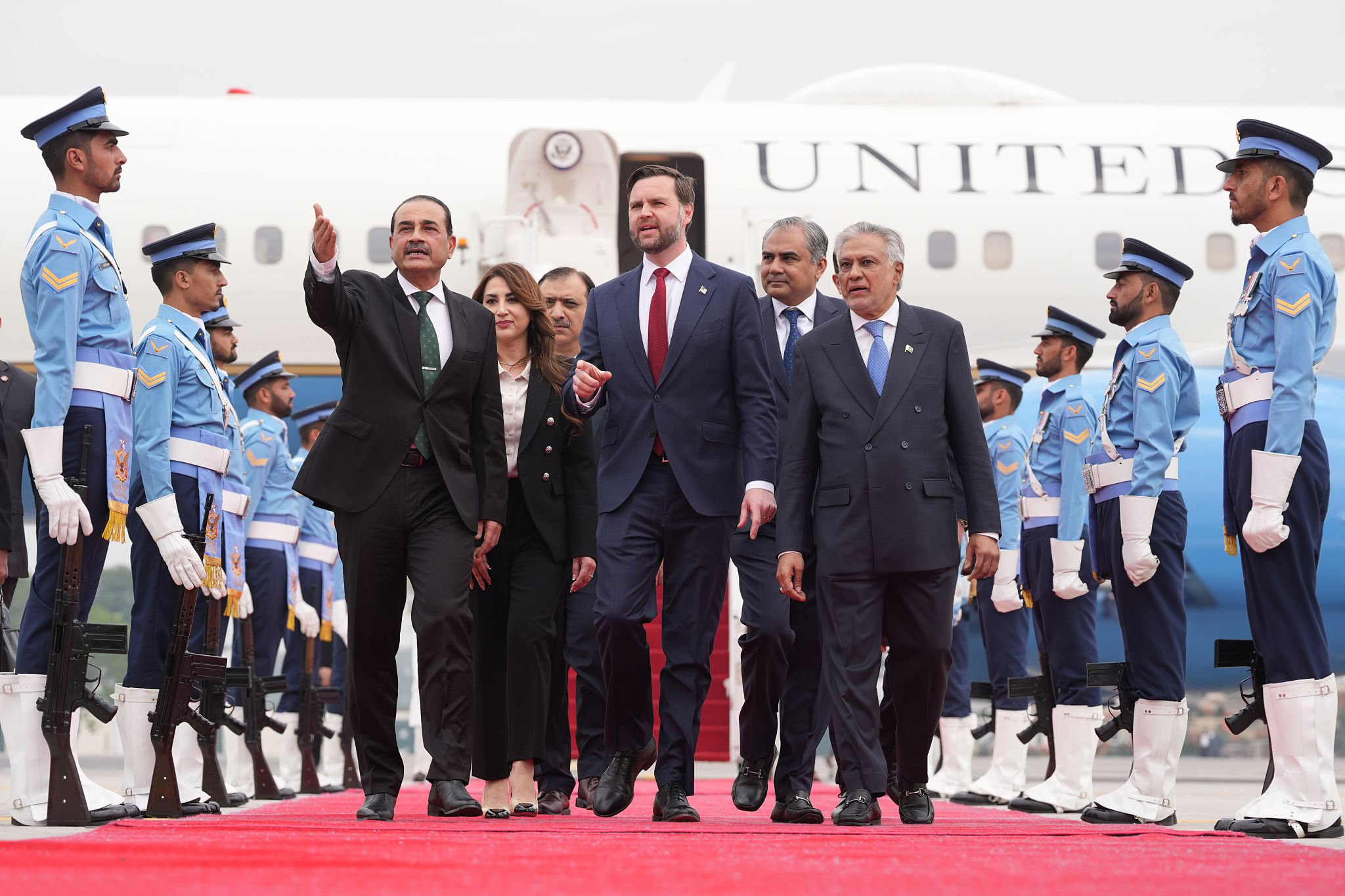
The Rawalpindi Gamble: Why Pakistan's Strategic Bets Could Backfire
Field Marshal Asim Munir has made Pakistan useful to Washington and Riyadh. But countries that build their foreign policy on personal patronage and concentrated dependence rarely emerge stronger - and Pakistan's 259 million citizens will bear the cost when the calculus shifts.
In the early hours of April 6, 2026, Field Marshal Asim Munir was reportedly on the phone through the night with American and Iranian military leadership, threading a diplomatic needle on the Iran war that Washington could not publicly manage itself. Islamabad had made itself useful. It was, by any measure, a remarkable position for a man who less than a year earlier had been described by analysts as perhaps the most reviled Pakistani army chief since 1971, saved from that verdict only by the temporary nationalist wave following the India-Pakistan conflict of May 2025. Today he holds the rank of Field Marshal, commands lifelong legal immunity, controls the army, navy, air force, and nuclear command simultaneously, and is feted in Riyadh and Washington. The question no one in Rawalpindi seemed to be asking was what happens to countries that make themselves useful to an unpredictable patron, and then stop being useful.
That question sits at the heart of a broader strategic gamble that Pakistan's leadership - Munir and Prime Minister Shehbaz Sharif - has placed with growing recklessness. They've staked heavily on Donald Trump's transactional style for diplomatic and economic oxygen, while tilting decisively toward Saudi Arabia in ways that risk alienating the UAE. Short-term gains are visible: White House praise, mediation roles on Iran, tariff relief signals, fresh Saudi deposits, and defense pact optics. It feels like a clever lifeline in a suffocating crisis. It is not. It is a dangerous concentration of risk - personal, bilateral, and regional - that could unravel with devastating speed. When the alignments shift, as they inevitably do with unpredictable leaders and competing Gulf interests, the 259 million Pakistanis who had no voice in these calculations will bear the heaviest burden.
The Structural Crisis Beneath the Diplomacy
Pakistan's challenges are stark and structural. Total external debt and liabilities have crossed $138 billion. Growth hovers around a modest 3.5 percent. Inflation remains stubborn. Foreign investment stays weak. Relations with India are frozen in hostility. Afghanistan offers no strategic depth, only persistent security headaches. Domestically, deep public resentment simmers over governance and economic pain.
Into this vacuum, Trump 2.0 arrived with an appealing proposition: no endless lectures on democracy or human rights, just direct deals and personal rapport. Munir and Sharif delivered tangible value - facilitation on US-Iran channels, quiet security cooperation - and received public validation in return. Simultaneously, the pivot toward Riyadh intensified: the Strategic Mutual Defense Agreement, high-level engagements, and Saudi financial support explicitly timed to ease pressures from UAE repayment demands. Riyadh offers immediate cash flow, defense signaling, and regional positioning.
These moves provide breathing room. They also create fresh vulnerabilities that demand far more rigorous oversight than seems to have been applied.
The Limits of Personal Diplomacy
Trump offers leverage, not enduring partnership. His first term delivered blunt public criticism - "lies and deceit" - and suspended assistance, with warming only when Pakistan proved useful for the Afghanistan exit. Even close partners with greater leverage have faced sudden reversals, tariff threats, or public rebukes when domestic US priorities shifted.
That fragility is not hypothetical; it is already visible at home. Trump's overall approval rating has fallen to around 38 percent, with his economic approval dropping to a career low of 31 percent. Nearly two-thirds of Americans say his policies have worsened economic conditions. His net approval stands at roughly minus 17, near second-term lows. A foreign policy built on the personal chemistry of a deeply unpopular leader is inherently fragile; it collapses the moment the deal-making calculus changes.
The limits of Trump's personal endorsements extend well beyond Pakistan. In April 2026, Hungarian Prime Minister Viktor Orbán - one of Trump's most celebrated international allies, a man Trump described as "a fantastic man" days before the vote - lost a landslide election despite Vice President Vance flying to Budapest to campaign for him in the final days. Orbán's challenger won a two-thirds parliamentary supermajority. Trump's overt personal intervention not only failed to save his ally; it may have hardened opposition sentiment. Pakistan's leadership would do well to absorb this lesson: association with a weakened and increasingly polarizing foreign patron can become a liability, not an asset.
Institutional Washington Has a Long Memory
The United States is far more than one president. Institutional Washington - the State Department, Pentagon, Congress, intelligence community - maintains deep, structural concerns about Pakistan's nuclear security, militant linkages, democratic backsliding, and China ties. Trump can temporarily soften the tone, but he cannot erase decades of institutional memory or the bipartisan US tilt toward India as a counterweight to Beijing. When the administration changes, Pakistan risks confronting a more skeptical establishment that viewed the Trump courtship as transactional expediency rather than genuine alignment.
The China entanglement cannot be ignored. CPEC projects represent tens of billions in critical infrastructure and remain central to Pakistan's economic lifeline. China is the largest investor, arms provider, and consistent diplomatic supporter. Trump's defining foreign policy driver is strategic competition with Beijing. Pakistan cannot indefinitely straddle both sides without facing mounting pressure to choose. The day of reckoning will expose how much relational capital was spent chasing short-term US optics.
The Domestic Legitimacy Deficit
External validation cannot manufacture domestic legitimacy. Praise from Trump or handshakes in Riyadh do little to address public alienation at home. In Pakistan's polarized politics, being perceived as overly dependent on foreign patrons can quickly become a liability. Anti-patron sentiment is easily mobilised. Short-term external wins provide no substitute for resolving internal governance and economic grievances.
This deficit runs deeper than ordinary unpopularity. PTI candidates, contesting independently after the party was barred from the February 2024 elections, still secured the most seats in parliament. The response from the establishment was not accommodation but escalation: rigged results, mass arrests, additional prison sentences for Imran Khan totalling over thirty years across multiple convictions, the creation of a parallel Federal Constitutional Court to limit Supreme Court oversight of military actions, and Munir's elevation to Field Marshal with lifelong legal immunity. Two Supreme Court justices resigned in protest.
The external courtship and the internal crackdown are not separate stories. They are the same story. A military leadership that has suppressed the country's most popular political figure and engineered constitutional structures to protect itself from accountability is pursuing maximum foreign validation precisely because it commands minimum domestic legitimacy.
There is also a sharp and underreported contradiction at the heart of the Washington courtship. A bipartisan group of US lawmakers introduced the Pakistan Democracy Act, seeking personal sanctions on Munir for the persecution of political opponents. Pakistan's leadership is simultaneously cultivating Washington for diplomatic oxygen and watching Washington's own legislature move to sanction the man conducting that courtship.
The Gulf Tightrope
A particularly under-examined vulnerability is the apparent prioritisation of Saudi Arabia - through the defense pact, mediation channels, and using Riyadh's deposits to navigate UAE repayment pressures. Pakistan maintains vital ties with both Riyadh and Abu Dhabi, yet the sequencing and optics suggest a clear tilt that has strained trust with the UAE. Debt rollover disputes have already created friction; reduced UAE support in future crises could prove costly given its importance for remittances, investment, and economic buffers.
There is a broader geopolitical deterioration that compounds all of this. Trump's relationship with NATO has entered genuinely dangerous territory. After European allies declined to contribute military forces to his Iran campaign, Trump began openly discussing potential NATO withdrawal. For Pakistan, which depends on a functioning, US-anchored international order for diplomatic cover, arms access, and multilateral financing, an America accelerating its retreat from alliance commitments is not a reliable anchor. It is an accelerating liability.
History as Warning
Pakistan has travelled this path before. Under Zia ul-Haq, alignment with US anti-Soviet efforts in Afghanistan brought substantial aid but sowed seeds of long-term radicalisation and militancy. Under Musharraf, post-9/11 partnership delivered debt relief and legitimacy for military rule, yet contributed to the rise of the Pakistani Taliban and national humiliations like Abbottabad. In each case, short-term patronage gains masked accumulating strategic costs.
The current approach - layering Trump personalisation with a Saudi-centric Gulf posture - risks repeating the cycle with new variables and fewer margins for error.
What Serious Leadership Would Look Like
Serious leadership would broaden engagement beyond any single figure or capital. Cultivate institutional ties in Washington that survive presidential transitions. Actively repair and balance Gulf relationships. Pursue pragmatic, incremental steps toward economic and trade normalisation with India. Invest seriously in Afghanistan stabilisation. Most urgently, drive domestic reforms that reduce perpetual dependence on external bailouts.
No foreign leader or patron will perform this internal work. Shortcuts only delay the reckoning.
Trump's priorities will shift with domestic US politics and global headlines. Saudi calculations can change with regional winds or fiscal realities. UAE goodwill, once eroded, is difficult to rebuild at the moment of need. Pakistan could emerge with complicated China ties, wary institutional relations in Washington, fractured Gulf support networks, and unresolved domestic tensions.
This is not sophisticated multi-alignment. It is a high-risk bet on concentrated patronage that amplifies fragility across multiple fronts. Pakistan has seen versions of this gamble play out before. The outcomes have rarely favoured long-term national strength.
The country's 259 million citizens deserve leadership that weighs decades, not just the next aid tranche or photo-op. History rarely forgives strategic myopia. The test is whether Pakistan's leaders recognise the gamble for what it is before the costs compound beyond recovery.
Sydney Baker is the consulting Editor at Imprint.

The New Architecture of Gulf Power in a Multipolar World
As Washington recalibrates its regional posture and Beijing deepens its economic footprint, the Gulf states are no longer choosing sides — they are writing the rules of a new game entirely.
Democracy Is Not Failing. It Is Being Deliberately Dismantled.
The erosion of democratic norms is not a symptom of system failure — it is the output of a systematic project that has been running for twenty years.
Weekly intelligence for serious readers
Original analysis, featured essays, and the ideas shaping the region — delivered every Thursday.